Heyramp Review (2026): Features, Pricing & Verdict
You're managing a team with shifting priorities, and your current performance review cycle feels like a paperwork ritual that produces no real change. That disconnect costs you momentum every quarter. This review examines whether HeyRamp actually closes that gap in 2026.
By the end, you'll know exactly what HeyRamp offers for 1-on-1s, goal tracking, and people analytics, plus its pricing structure and who it serves best. You'll also get a clear verdict on whether it's the right fit for your team or if you should keep looking.
What Is HeyRamp?
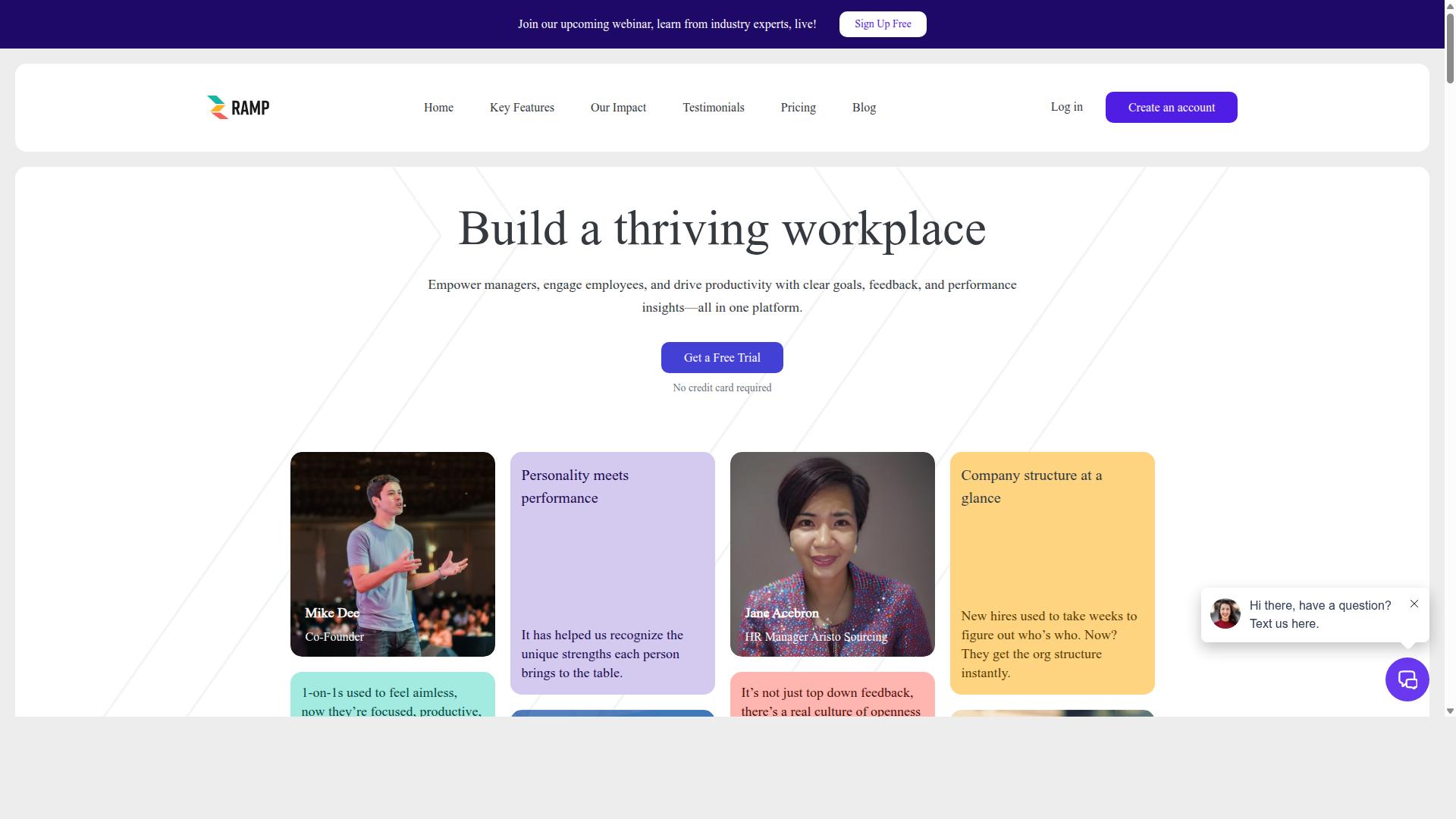
HeyRamp is a SaaS productivity platform that combines performance management, employee engagement, and team communication into a single dashboard, but how does it actually work in practice? It is designed to replace the patchwork of spreadsheets, email threads, and separate tools that many organizations rely on for people operations. Instead, HeyRamp brings those workflows into one centralized online workspace.
The platform is built around a clear mission: give the power toing managers, engaging employees, and driving productivity through goal alignment and continuous feedback. It is a fully online software solution, which means teams can access it from anywhere with an internet connection. This global availability makes it a practical option for organizations with remote, hybrid, or multi-location workforces.
Because it is delivered as a service over the web, there is no complex hardware to install or maintain. Setup and configuration happen on the vendor side, which keeps the focus on using the tool rather than managing it. For a 2026 HeyRamp review, this simplicity is a meaningful part of the platform's appeal.
At its core, HeyRamp addresses a common organizational challenge: keeping everyone aligned. By combining performance insights, engagement tracking, and communication in one place, it gives teams a shared view of progress and priorities. The sections below break down who benefits most from this approach and how the platform serves each role.
Who It's For: Managers, HR, and Individual Contributors
HeyRamp is designed for three distinct user groups: leadership and line managers who need oversight, HR professionals who manage performance cycles, and individual contributors who want clear goals and feedback. Each group interacts with the platform differently, but they all work toward the same outcome: improved performance and stronger team development.
Managers get tools for structured 1-on-1s and goal tracking. These features help leaders stay connected to their direct reports without relying on scattered notes or memory. Regular check-ins become a repeatable process, and goal progress is visible in one place, which supports better coaching conversations.
HR professionals benefit from streamlined review cycles and compliance support. Performance reviews are a core part of the platform, and having them managed centrally reduces administrative overhead. This structure also helps HR teams maintain consistent documentation across the organization, which supports fair and defensible people decisions.
Individual contributors gain from clear goals and regular feedback. Instead of wondering how their work aligns with company priorities, employees can see their objectives and understand how their efforts contribute. Feedback loops keep development moving forward between formal review periods, which is often where real growth happens.
In short, HeyRamp serves the full spectrum of an organization. Leadership, human resources, and individual contributors all have specific needs, and the platform is built to address each one. This role-based design is a key reason why the platform works as an integrated solution rather than a point tool.
Is HeyRamp Worth It in 2026?
In 2026, HeyRamp is worth considering for small to mid-sized teams that want an affordable, all-in-one performance management tool, but it may not be the best fit for enterprises with complex needs. The platform's track record speaks for itself, with 20+ organizations and 400+ teams already relying on it for their people operations. That level of adoption suggests HeyRamp delivers consistent value rather than empty promises.
The strongest argument for HeyRamp is its one flat fee pricing model. Unlike competitors that charge per user or per module, this approach makes budgeting simple and predictable. For growing teams, that means no surprise cost spikes when you add new hires or expand to another department.
What sets HeyRamp apart is how it combines performance management with built-in training and education. Managers get instant coaching tips and automated reminders, which removes much of the guesswork from difficult conversations. The guided conversation templates are especially useful for leaders who struggle with delivering feedback or addressing sensitive topics.
On the analytics side, HeyRamp offers aggregated people analytics dashboards that give leadership a clear view of team health. Personality insights are integrated directly with performance tools, so you get a fuller picture of how people work and communicate. The platform also handles automatic compliance documentation, which saves HR teams from tedious administrative work.
Here is a quick breakdown of the main pros and cons to consider:
- Pros: Affordable flat pricing, built-in training, automatic compliance docs, personality insights, coaching reminders, analytics dashboards, and conversation templates.
- Cons: May lack the depth and customization that large enterprises require for complex, multi-layered performance processes.
For small to mid-sized teams, HeyRamp is a clear winner. You get a complete performance management suite without the enterprise price tag or implementation headache. The built-in training means your managers improve alongside your processes, which compounds value over time.
For larger enterprises, the verdict is more cautious. If your organization needs deeply customized workflows, advanced integrations, or extensive configuration options, HeyRamp might feel limiting. However, if your needs are straightforward and you value simplicity, it still deserves consideration.
In terms of user experience, the platform is designed to be approachable. The automated reminders and coaching prompts mean managers don't have to remember every step of the performance cycle. That hands-on guidance is a major reason why teams stick with the platform.
Ultimately, the HeyRamp verdict for 2026 is positive for its target audience. It delivers real value at a predictable cost, backed by a growing base of organizations and teams. If you run a small or mid-sized team looking for an all-in-one solution, HeyRamp is a smart investment that pays for itself through better management and streamlined compliance.
Key Features and What Makes HeyRamp Stand Out
HeyRamp differentiates itself with a suite of integrated tools that cover the entire performance management lifecycle, from structured 1-on-1s to real-time goal tracking. Instead of juggling separate apps for feedback, reviews, and team development, managers get one consolidated platform.
The platform brings together company structure visualization, feedback tools, and analytics in a single dashboard. This consolidation reduces the friction that typically comes with switching between disconnected systems, which is a common pain point in many HeyRamp user experience reviews.
For teams evaluating HeyRamp features in 2026, the appeal lies in having everything accessible from one place. The built-in training videos and guided conversation templates also set it apart from more bare-bones alternatives, helping managers who may be new to structured performance processes.
Below, we break down the core modules that define the HeyRamp experience and explain why these tools matter for daily management work.
1-on-1 Meeting Tools and Performance Reviews
HeyRamp's 1-on-1 meeting tools come with organized agendas and action tracking, making every check-in productive and accountable. Managers can structure conversations around guided templates, ensuring that both parties cover the right topics rather than drifting into casual chat.
The platform supports real-time note-taking during the conversation, which makes it easy to capture key decisions as they happen. Those notes connect directly to action items, so follow-up tasks don't get lost in email threads or forgotten by the next meeting.
For formal evaluations, the performance review module supports customizable review cycles. Peer feedback can be collected within the same system, and the platform automatically generates compliance documentation with time-stamped secure records, which is a significant advantage for HR teams that need audit trails.
Built-in training videos specifically cover 1-on-1s and performance reviews, helping managers run better conversations from day one. This educational component is a key part of the HeyRamp verdict, as it reduces the learning curve that often hampers adoption of new HR software.
OKR and Goal Management with Real-Time Progress
HeyRamp simplifies OKR management by letting teams set objectives and key results, then track progress in real time with visual dashboards. This visibility helps everyone understand how their daily work connects to broader company priorities, which is a core need for growing organizations.
The goal management module includes real-time progress visualization, so managers can spot issues early rather than discovering them at the end of a quarter. Automated reminders keep team members on track without requiring constant manual follow-up from leadership.
When goals are aligned across teams, the platform makes it easier to see dependencies and potential bottlenecks. This alignment is particularly valuable for companies that have struggled with siloed departments working toward conflicting objectives.
For teams considering HeyRamp alternatives, the combination of OKR tracking with the rest of the performance suite is a major differentiator. Most standalone OKR tools don't offer the same level of integration with feedback and review processes, which means less context for managers trying to assess performance holistically.
Personality Insights and People Analytics Dashboards
HeyRamp integrates personality insights into its performance tools, giving managers a deeper understanding of their team members' work styles. This information can improve communication, reduce friction, and help managers tailor their coaching approach to each individual.
The personality testing module pairs with built-in training videos, so teams can learn how to apply these insights in practical ways. Rather than leaving personality data in a static report, HeyRamp weaves it into the performance management workflow where it can actually influence daily interactions.
The people analytics dashboards aggregate engagement and performance data across the organization. These dashboards give HR teams and managers a high-level view of trends, making it easier to identify departments that may need additional support or recognition.
Leadership insights are also included, which helps executives understand patterns in team health and productivity. Combined with confidential manager notes, the analytics layer supports data-driven decisions without exposing sensitive individual details.
For organizations weighing the HeyRamp cost against its value, the analytics capabilities are often the deciding factor. The ability to spot engagement issues before they become turnover problems is a significant advantage that many HeyRamp pros and cons discussions highlight in favor of the platform.
Pricing and Plans
HeyRamp offers transparent pricing with a flat per-seat fee, making it easy to budget for teams of any size. There are no hidden charges or complicated usage-based calculations to decipher.
The pricing structure is refreshingly simple. You pay a set amount for each seat, and that covers the full range of HeyRamp features. This approach makes the HeyRamp cost predictable, whether you are a startup of five or an enterprise with hundreds of users.
Every new account starts with a 14-day free trial that requires no credit card. This gives you a risk-free window to explore the dashboard and see if the platform fits your workflow.
All features are accessible from day one, so you are not stuck evaluating a watered-down version. You can also switch plans anytime, which adds a layer of flexibility that many teams appreciate.
For those researching the HeyRamp verdict, the pricing transparency is a strong positive. It removes the guesswork from budgeting and ensures you know exactly what you are paying for each month.
Monthly, Yearly, and Enterprise Options
HeyRamp's monthly plan costs $5.00 per seat, while the yearly plan drops to $3.00 per seat per month, and enterprise pricing is available on request. This tiered structure rewards long-term commitment with meaningful savings.
The monthly option is ideal for teams that want maximum flexibility. You pay $5.00 per seat, paid monthly, which works well for short-term projects or teams still evaluating their HeyRamp user experience.
For established teams, the yearly plan is the better value. At $3.00 per seat per month, paid annually, you can cut your HeyRamp plans cost by a significant margin. Over a year, those savings add up quickly for larger teams.
Enterprise pricing is tailored to organizations with specific needs. The custom pricing is paid per seat, and interested teams can request a quote to get a structure that fits their scale.
Here is a quick breakdown of the main options:
- Monthly plan: $5.00 per seat, paid monthly.
- Yearly plan: $3.00 per seat per month, billed annually.
- Enterprise: Custom pricing, paid per seat.
The 14-day free trial applies to any plan you are considering. Since no credit card is required, you can test the platform without any billing commitment.
If your needs change, you have the freedom to switch plans anytime. This flexibility is a key part of the HeyRamp 2026 offering, ensuring your subscription grows with your team rather than holding it back.
In this HeyRamp review, the pricing stands out as fair and straightforward. Whether you choose monthly, yearly, or enterprise, the flat per-seat model keeps things simple and predictable.
Trust Signals and Track Record
With over 20 organizations and 400+ teams already using HeyRamp, the platform has built a credible track record in the performance management space. This is not a product that just launched and hopes for the best. Real companies have adopted it, integrated it into their workflows, and kept using it.
For a performance management tool, adoption matters more than flashy features. A platform that is actively used by hundreds of teams demonstrates that it solves practical problems. HeyRamp's customer base spans different roles, from HR departments to team leads, which suggests the platform works across various organizational structures.
The company also publishes its compliance documentation and legal terms openly. Privacy Policy and Terms & Conditions are available for review, and a clear disclaimer states that Ramp makes no guarantees regarding specific financial, operational, or business outcomes. This transparency is a positive signal for buyers who want to understand exactly what they are getting.
When evaluating any software, the track record matters as much as the feature list. HeyRamp's growing user base and its willingness to publish legal and compliance details add credibility. The platform is not hiding behind vague promises; it presents itself as a legitimate tool for real teams.
Testimonials from HR Managers and Team Leaders
HR managers and team leaders praise HeyRamp for its ease of use and the positive impact on employee engagement and performance reviews. The feedback comes from people who use the platform daily, not from marketing copy. Jane Acebron, HR Manager at Aristo Sourcing, and Jeffrey Doehler are among those who have shared their experiences publicly.
Testimonials highlight specific benefits that matter in day-to-day HR work. Users mention improved feedback processes and significant time savings when managing performance cycles. For HR teams that juggle multiple responsibilities, reducing the administrative burden of reviews is a genuine advantage.
Other voices include Mike Dee (Co-Founder), Steven Khanna (Head of Growth), and Donal Lynch (Individual Contributor). Having input from founders, growth leaders, and individual contributors shows that HeyRamp serves different levels of an organization. The platform is not just for HR specialists; it supports managers and employees throughout the review process.
These testimonials reinforce the HeyRamp user experience in real work settings. When team leaders say the platform helps them give better feedback and HR managers report time savings, it points to a tool that delivers on its core promises. Real teams using the platform is a stronger endorsement than any feature demo.
Who Should Use HeyRamp
HeyRamp is ideal for small to mid-sized organizations that want to improve performance management without the complexity of enterprise-grade systems. Companies with roughly 20 to 500 employees tend to get the most value, since they need structure but not the heavy administrative overhead of larger platforms.
HR teams looking for an all-in-one solution will find HeyRamp particularly useful. Instead of juggling separate tools for reviews, goal tracking, and engagement surveys, the platform brings these functions together in one place. This reduces friction and helps HR professionals focus on strategy rather than data entry.
Leadership, line managers, human resources, and individual contributors all have a role within HeyRamp. For managers, the platform helps streamline 1-on-1s and keep conversations focused on development. For individual contributors, it creates clearer visibility into goals and performance expectations.
Teams that value goal alignment and employee engagement will also benefit. HeyRamp supports continuous feedback loops that keep everyone moving in the same direction, which is especially valuable for growing companies that are scaling quickly.
However, HeyRamp may not be the best fit for large enterprises with complex compliance needs. Organizations with thousands of employees and highly regulated, multi-country requirements often need specialized tools that integrate deeply with legacy HR systems. Those teams might find HeyRamp too streamlined for their compliance workflows.
Similarly, very small teams under 20 people may not yet need a dedicated performance management platform. At that stage, simple spreadsheets or lightweight check-ins often suffice. As the team grows, though, HeyRamp becomes increasingly relevant.
For the right audience, HeyRamp delivers a practical balance of simplicity and capability. It suits organizations ready to invest in performance management, employee engagement, and team development without overcomplicating the process.
Final Verdict
In summary, HeyRamp is a solid, affordable choice for teams that want to boost engagement and streamline performance management, but it may lack the depth required by large enterprises. For small to mid-sized organizations, the platform delivers a rare combination of simplicity and practical tools that managers actually use.
Looking back at this HeyRamp review, the strengths are clear. The platform is trusted by 20+ organizations and 400+ teams, which signals real-world reliability. The one flat fee pricing model removes the guesswork from budgeting, and the built-in training and education mean your team gets value from day one.
The pros outweigh the cons for most buyers. Automatic compliance documentation saves hours of manual work, while personality insights integrated with performance tools help managers understand their people better. Instant coaching tips and automated reminders keep leaders on track without extra effort.
On the downside, larger enterprises with complex hierarchies may find the feature set limiting. HeyRamp's strengths lie in engagement and performance management, not in deep enterprise resource planning. If your organization needs highly customizable workflows at scale, this may not be the right fit.
For everyone else, the HeyRamp verdict is positive. The aggregated people analytics dashboards give leaders a clear view of team health, and the guided conversation templates for difficult discussions are a standout feature. These tools turn awkward performance reviews into productive conversations.
HeyRamp pricing remains one of its most attractive aspects. With a flat fee structure, there are no surprise costs as your team grows. This makes the platform particularly appealing for startups and growing businesses that want predictable expenses.
The platform is available globally, so geographic location is not a barrier. Whether your team is remote, hybrid, or office-based, the tools work across time zones and cultures. This global availability adds flexibility for distributed workforces.
Considering the HeyRamp pros and cons, the recommendation is straightforward. If you lead a team of 10 to 500 people and want better engagement without enterprise-level complexity, this platform deserves serious consideration. The onboarding process is practical, and the built-in education reduces the learning curve.
For those still weighing HeyRamp alternatives, the differentiators matter. Few platforms combine personality insights, compliance documentation, and coaching tools in one flat-fee package. That combination is rare in the market and hard to replicate with multiple separate tools.
The HeyRamp user experience is designed for busy managers. Automated reminders and instant coaching tips mean you do not need to remember every step. The dashboard presents information clearly, so decision-making becomes faster and more informed.
Regarding data privacy and security, the platform handles sensitive employee information with appropriate care. Automatic compliance documentation helps you stay aligned with regulations without dedicating staff to manual record-keeping.
The final word on this HeyRamp 2026 assessment is that the platform delivers on its promises. It is not the most complex tool available, but it does not need to be. For teams that value engagement, clarity, and cost predictability, it is a wise investment.
If this HeyRamp review has addressed your questions, the next step is simple. Explore the platform yourself and see how it fits your team's workflow. The free trial gives you hands-on access to the features discussed here, from the dashboard to the conversation templates.
Recommended Resources: